Infrastructure
Communication Lab
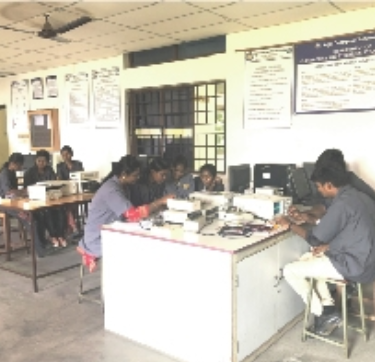
The Communication Laboratory is established to provide comprehensive hands-on training in the fundamental and advanced concepts of communication engineering by covering the functioning and analysis of all essential building blocks used in modern communication systems. The laboratory enables students to practically explore analog and digital modulation techniques with AD kits, pulse and baseband communication kits, noise analysis, and signal transmission and reception using standard trainer kits, measuring instruments, and simulation tools.
Digital Lab
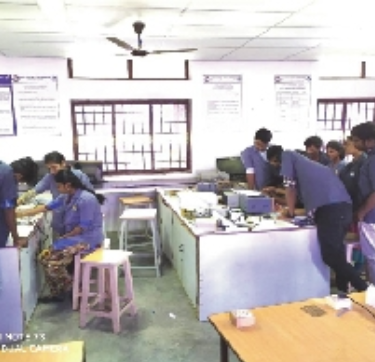
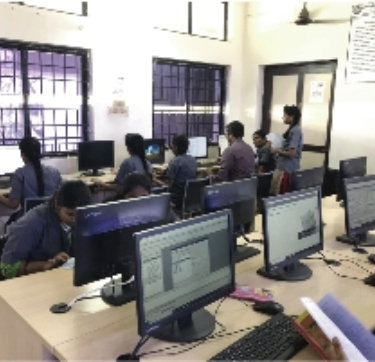
Digital lab helps the students to acquire basic knowledge about the design of combinational and sequential logic circuits and this lab also contains CAD tools like PSPICE and xilinx to design a modern digital system design.
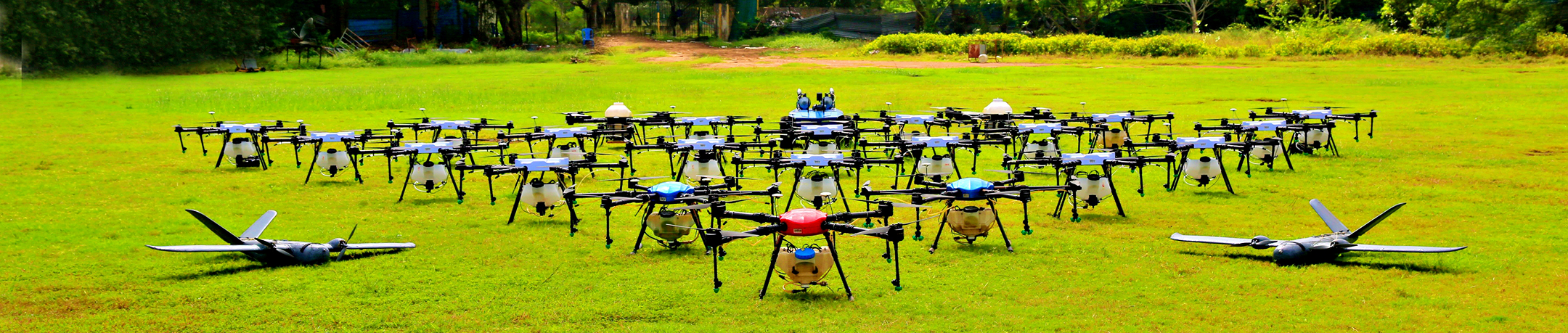
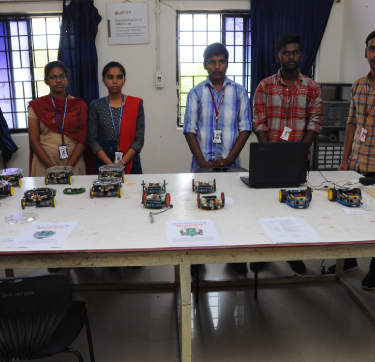
E Yantra Lab
Electronic Circuits Lab
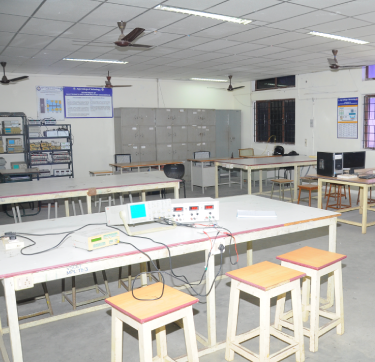
EDC lab enables students to design and build basic electronic circuits and experimentally verify their performance in alignment with theoretical concepts. The laboratory is equipped with electronic trainer kits, discrete and integrated electronic components, regulated power supplies, function generators, digital storage oscilloscopes, multimeters, and simulation tools. The experiments are carefully structured to strengthen foundational understanding while progressively enhancing the analytical, design, and practical engineering skills of students through hands-on circuit implementation, testing, and result analysis.
Embedded/ PG Communication Systems Lab
Embedded systems lab helps the students to enhance their knowledge on architecture, programming and interfacing of various processors and microcontrollers. The features and facilities available in this lab help the students to do their projects and enhance their knowledge on the latest trends and technologies.
PG Communication Systems laboratory focuses on training the students to study & measure the performance of digital communication systems, acquire knowledge on Transmission line and Sparameter estimation of microwave devices, introduces the basics of Micro strip Patch Antenna & its analysis and also helps students to design & develop RF components using micro strip technology.
LIC Lab
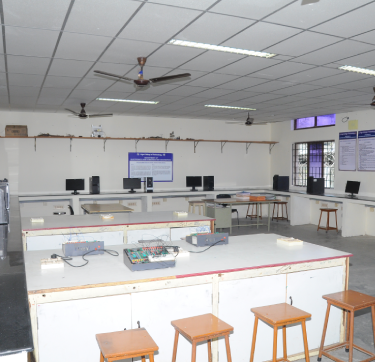
LIC lab aims to understand the basics of linear integrated circuits and available ICs and to acquire the basic knowledge of special function IC. The laboratory is equipped with LIC trainer kits, operational amplifier ICs, special function ICs, regulated power supplies, function generators, digital storage oscilloscopes, multimeters, and necessary interfacing components, enabling effective hands-on learning and experimental validation of theoretical concepts.
Microprocessor Lab
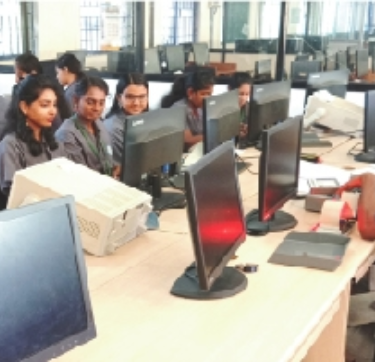
Microprocessor laboratory aims at providing hands on session to students on 8086 Microprocessor, 8051microcontroller and its interfacing The laboratory is equipped with 20 Intel Pentium systems with MASM and Keil software enabling students to develop programs.
Microwave Lab
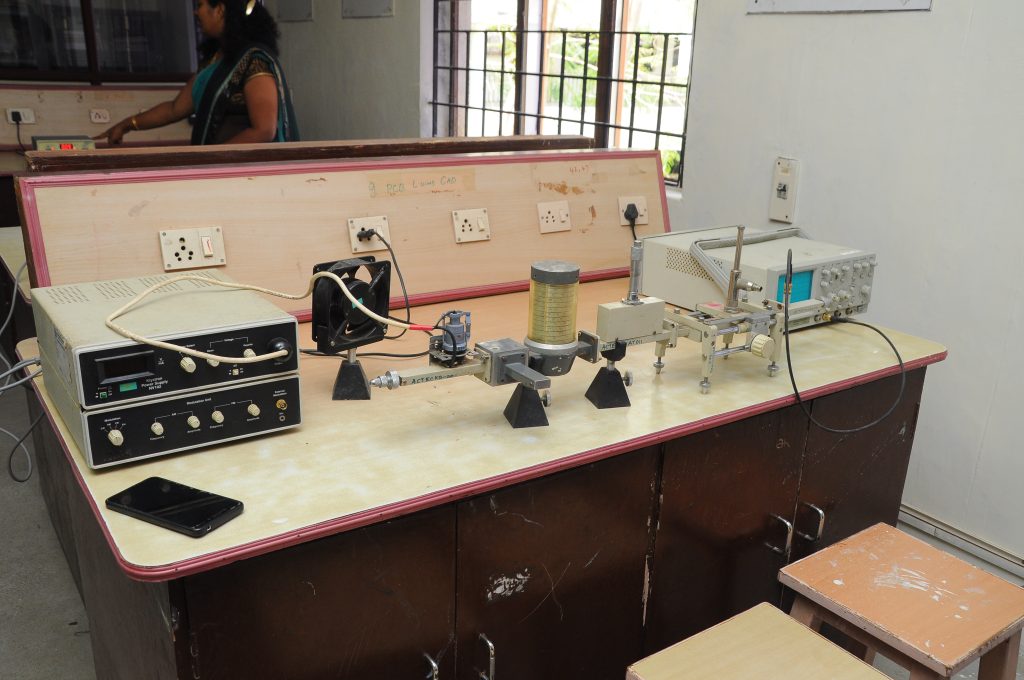
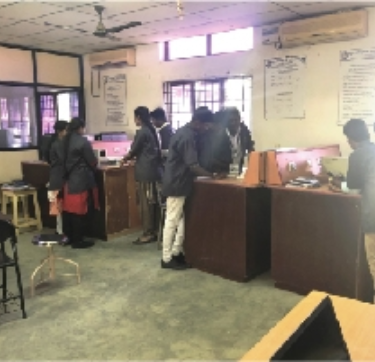
The Microwave Laboratory familiarizes students with the fundamental principles and practical aspects of Microwave and Optical Communication systems. The laboratory is well equipped with microwave test benches and optical communication trainer kits, enabling students to gain intensive hands-on training and a clear understanding of high-frequency signal generation, transmission, measurement, and analysis. Through systematic experiments, students develop deep insight into the behavior, performance, and applications of high-frequency and optical communication systems used in modern wireless and broadband networks.
VLSI/DSP Lab
The VLSI laboratory provides hands-on experience to students in the field of analog and digital circuit design. The Students gain knowledge in using EDA tools to design, simulate, and verify schematics and layout of logic gates. It also serves to facilitate design and implementation of digital design on FPGA.
DSP laboratory presents an opportunity for students and staff members to check out their signal processing algorithms. The laboratory has both software tools and DSP processors.