About the
Department
Established in 2010, the Department of Mechanical Engineering at Agni College of Technology has been offering the B.E. in Mechanical Engineering program with a strong commitment to academic excellence. The department is affiliated to Anna University, Chennai, approved by AICTE, New Delhi, and proudly accredited by the National Board of Accreditation (NBA), underscoring its adherence to the highest standards of engineering education.
With a team of highly qualified and experienced faculty members, the department emphasizes both theoretical knowledge and practical skills. Students benefit from modern laboratories and state-of-the-art research facilities, including a well-equipped research laboratory that fosters innovation and hands-on learning.
The department’s mission is to prepare graduates who are industry-ready, research- oriented, and capable of contributing to technological advancements in the field of mechanical engineering.


Vision of
Mechanical Engineering Department
To be a centre of excellence in Mechanical Engineering education by imparting quality teaching, fostering innovative research, and producing globally competent, ethically responsible Mechanical Engineers who can meet industrial and societal needs.
Mission of
Mechanical Engineering Department
As a department, we are committed
- To impart quality technical education to acquire career and professional skills to compete at the global level.
- To foster the entrepreneurial spirit for managing global business ventures.
- To extend support to the industries of all domains by collaborative research and consultancy services.

Program Outcomes (POs)
Engineering Graduates will be able to:
- PO1: Engineering knowledge: Apply the knowledge of mathematics, science, engineering fundamentals, and an engineering specialization to the solution of complex engineering problems.
- PO2: Problem analysis: Identify, formulate, review research literature, and analyze complex engineering problems reaching substantiated conclusions using first principles of mathematics, natural sciences, and engineering sciences.
- PO3: Design/development of solutions: Design solutions for complex engineering problems and design system components or processes that meet the specified needs with appropriate consideration for the public health and safety, and the cultural, societal, and environmental considerations.
- PO4: Conduct investigations of complex problems: Use research-based knowledge and research methods including design of experiments, analysis and interpretation of data, and synthesis of the information to provide valid conclusions.
- PO5: Modern tool usage: Create, select, and apply appropriate techniques, resources, and modern engineering and IT tools including prediction and modeling to complex engineering activities with an understanding of the limitations.
- PO6: The engineer and society: Apply reasoning informed by the contextual knowledge to assess societal, health, safety, legal and cultural issues and the consequent responsibilities relevant to the professional engineering practice.
- PO7: Environment and sustainability: Understand the impact of the professional engineering solutions in societal and environmental contexts, and demonstrate the knowledge of, and need for sustainable development.
- PO8: Ethics: Apply ethical principles and commit to professional ethics and responsibilities and norms of the engineering practice.
- PO9: Individual and team work: FFunction effectively as an individual, and as a member or leader in diverse teams, and in multidisciplinary settings.
- PO10: Communication: Communicate effectively on complex engineering activities with the engineering community and with society at large, such as, being able to comprehend and write effective reports and design documentation, make effective presentations, and give and receive clear instructions.
- PO11: Project management and finance: Demonstrate knowledge and understanding of the engineering and management principles and apply these to one’s own work, as a member and leader in a team, to manage projects and in multidisciplinary environments.
- PO12: Life-long learning: Recognize the need for, and have the preparation and ability to engage in independent and life-long learning in the broadest context of technological change.
Program Educational Objectives (PEOs)
- PEO1: Graduates will have strong technical proficiency and will identify opportunities, develop innovative solutions, and establish their ventures in the field of Mechanical Engineering.
- PEO2: Graduates will work effectively in diverse global environments and collaborate across borders to address engineering challenges.
- PEO3: Graduates will have leadership qualities and management skills to lead teams, drive research and make strategic decisions in their careers.
Program Specific Outcome (PSOs)
Mechanical graduates will be able to:
- PSO1: Apply appropriate Computer Aided Engineering tools for Modelling, analysis and manufacturing techniques to develop mechanical components and systems.
- PSO2: Apply the concepts of thermal processes and propose innovative solutions to enhance energy efficiency and reduce emissions.
- PSO3: Analyse and implement Industry 4.0 principles, including the integration of data-driven decision-making, to optimize manufacturing and production processes.
Course Highlights
- Manufacturing Technology
- Strength of Materials
- Automobile Engineering
- Engineering Materials and Metallurgy
- Power Plant Engineering
- Mechatronics
- Robotics
- Design of Machine Elements
- Thermal Engineering
- Heat and Mass Transfer
- Kinematics and Dynamics
- Fluid Mechanics and Machinery
The Bachelor’s degree in Mechanical Engineering encompasses knowledge about science, maths, computing, machines, design, materials, manufacturing automation, energy and more.
Mechanical engineers are trained to work in a wide variety of industrial sectors and are no longer limited to the traditional automotive and manufacturing industries, and have extended to working in the field of nuclear technology, robotics, energy systems and even biomedical technology.
Entrepreneurship
Development
At Agni College of Technology, we encourage the possibility of earning while you learn, and becoming an Entrepreneur/CEO in related fields through the following programs
- 300 Startups
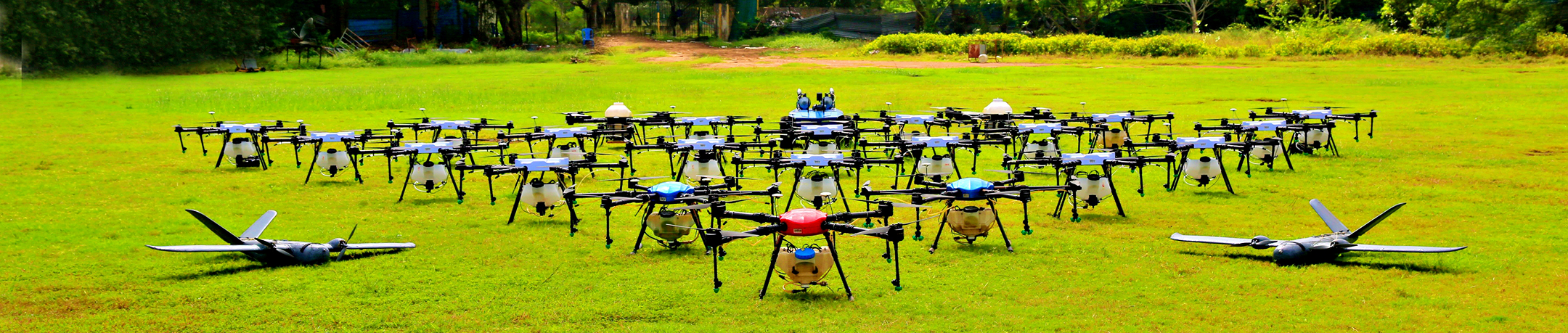
- Garuda Aerospace
- MSME Incubation
- Agni Yanthiran
Entrepreneurship in Mechanical Engineering starts right from small technical assistance to industries and service providers, designing and modelling for automotive industries, small components manufacturing, injection moulded products etc.
Agni College of Technology is the incubation centre for MSME business startups. The student entrepreneurs are given opportunity to a meet with Angel Investors to ensure funding for their startup’s and business ideas. You can enroll to be part of the 300 Startups by the Agni College of Technology and start earning during the course of study.
Industry Training
and Industry Powered Labs
- Ashok Leyland
- Ford India
- PRAG Robotics
- Hyundai
- Valeo
- India Pistons
- GH Induction
- Super Auto Forge
- Mando Automotives
- Eagle Burgmann
- Nissan
Industry Powered Labs
The department feels proud to embrace Three Industry Powered Laboratories equipped with modern machines and instruments/test rigs.
| S.No | Laboratory | Industry |
|---|---|---|
| 1 | Thermal Engineering Lab | Ford India Pvt Ltd, S.P.Koil Post, Chengalpattu - 603204 |
| 4 | CADD Laboratory | Harita Techserv Limited, Chennai - 600018 |
| 5 | Robotics Laboratory | Mallees Automated and Robotic Systems Pvt Ltd, Chennai - 600017 |